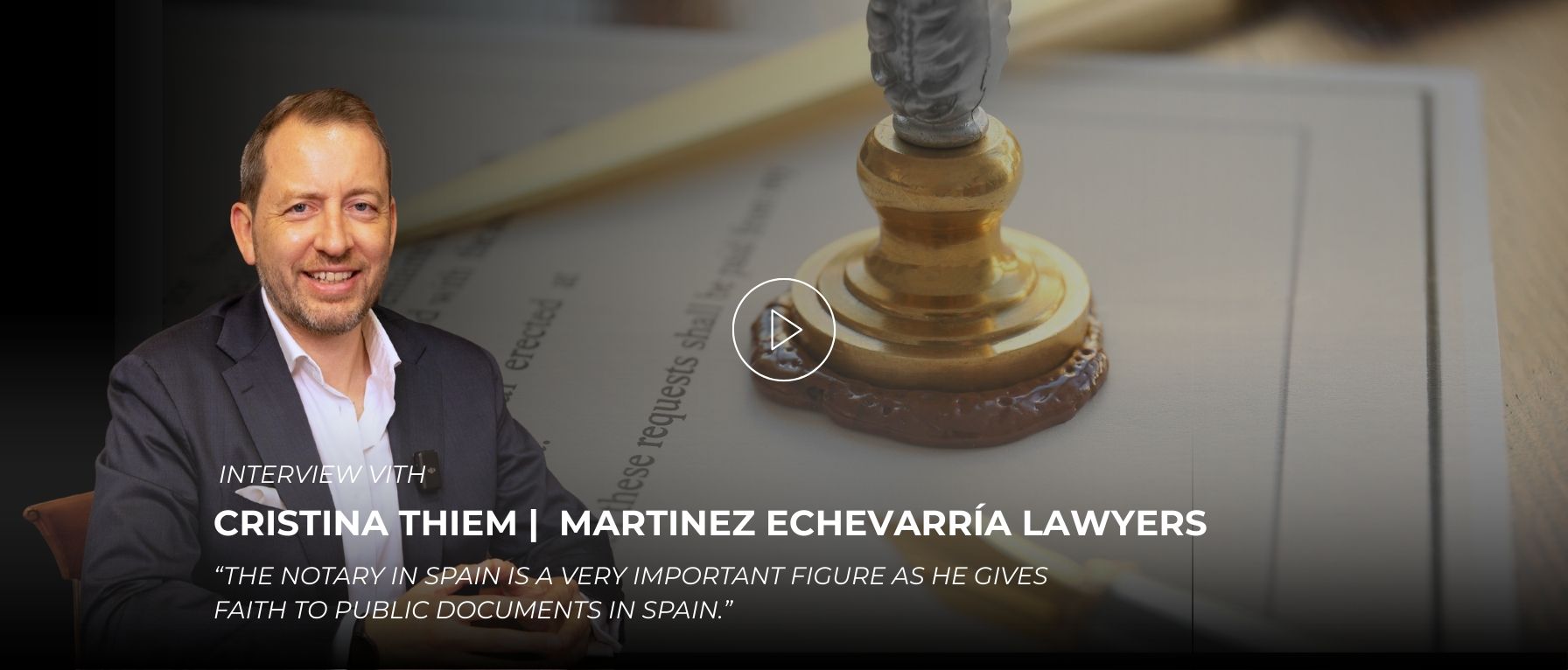
The Role of the Notary in Spain
Buying a property is one of the most important steps in anyone’s life, and in Spain this process is closely linked to a key figure: the notary. For those coming from other European countries, or even outside the European Union, the presence of the notary may seem striking or different compared to how transactions work in their home countries. However, the role of the notary in Spain is essential to provide legal certainty to the transaction and ensure that all parties comply with the law.
In this article, we will analyze in detail why the notary is indispensable, what functions he performs in the purchase of a property, and how his intervention protects both the buyer and the seller.
Who is the notary and what is his role?
The notary in Spain is a public official. This means that his main mission is to certify that the contracts and documents being signed comply with the law and reflect the true will of the parties.
In the case of real estate transactions, the intervention of the notary is not optional: all such operations must be formalized in a public deed before a notary in order to be valid and registered in the Land Registry.
Therefore, the notary does not act as a lawyer for either party, but as a guarantor of legality and transparency. His impartiality is absolute and his duty is to protect the interests of all.
The public deed: an essential step
When a buyer and a seller reach an agreement, it is time to formalize it through a contract. Although it is possible to sign a private agreement between the parties, it lacks the legal force and security provided by the public deed.
Here is where the role of the notary in Spain comes into play: he drafts and grants the purchase deed, a public document that certifies the transaction and is later recorded in the Land Registry.
In addition to drafting the contract, the notary ensures that the content is clear, that there are no abusive clauses, and that both parties fully understand the scope of what they are signing.
The continued note: protection against hidden charges
One of the most valuable aspects of the role of the notary in Spain is the request for the so-called “continued note.” This is a document issued by the Land Registry informing the notary of any possible encumbrances that may affect the property.
During the ten days prior to signing, if a mortgage, an embargo, or any other lien affecting the property appears, the Registry is obliged to notify the notary. This prevents unpleasant surprises and protects the buyer from hidden debts.
Therefore, the notary not only certifies the transaction, but also ensures that the property being acquired is free of charges that could compromise its value or enjoyment.
Verification of ownership and legitimacy of the seller
Another key function of the notary is to confirm that the person appearing at the notary’s office to sell the property is indeed its rightful owner. It may seem obvious, but in practice it is fundamental.
The notary checks the documentation, verifies the seller’s identity, and ensures that his name matches the one registered in the Land Registry. Only then can the buyer be guaranteed to acquire the property from the rightful owner.
Thanks to this process, fraud, illegal sales, or subsequent disputes between heirs, co-owners, or creditors are avoided.
The emotional importance of signing at the notary
Although it may seem like a purely administrative formality, the act of signing at the notary also has a strong emotional component. For the buyer, it is the moment when the dream of owning a home in Spain becomes real. For the seller, it represents closing a chapter in their life.
The notary, by certifying the act, provides an atmosphere of solemnity and trust. The parties know that what they are signing is valid, final, and recognized by law. This legal certainty translates into emotional peace of mind, especially in transactions as significant as buying a property.
Practical tips for going to the notary
-
Prepare all documentation in advance: ID or passport, NIE for foreigners, previous deeds, debt or encumbrance certificates, etc.
-
Consult with the notary: if there are doubts about the content of the deed, it is best to ask the notary to explain each clause before signing.
-
Check the property status: request the simple note or allow the notary to confirm that the property is free of charges.
-
Be accompanied by a lawyer: although not mandatory, having legal counsel helps interpret tax and legal aspects that go beyond the public deed itself.
These steps, together with the presence of the notary, offer the buyer an extra layer of security in a country they may not know in depth.
Differences with other countries
In some European countries, such as the United Kingdom, the role of the notary in real estate transactions is limited or non-existent, with lawyers leading the process. In contrast, in Spain the notary is at the center of the transaction and is essential for the sale to be valid.
This model offers significant advantages: notarial intervention guarantees uniformity, security, and transparency. In addition, it prevents future litigation and protects foreign buyers who may not master the language or local laws.
Final reflection: security as added value
Investing in a property is much more than an economic transaction. It involves expectations, dreams, and in many cases a life change. For this reason, the legal certainty provided by the notary is an intangible but decisive value.
The role of the notary in Spain should not be understood as a bureaucratic formality, but as a guarantee of trust. By ensuring legality, the notary makes sure the purchase proceeds without surprises, protecting both the financial investment and the emotional peace of mind of the parties.
Conclusion
The notary in Spain is an indispensable figure in property transactions. His work as a public officer ensures that the contract is legal, transparent, and secure. From drafting the deed to verifying charges, his intervention offers confidence and avoids future problems.
For both national and international buyers, understanding and valuing this function is essential. The peace of mind that comes from knowing everything has been done correctly is, without a doubt, one of the greatest benefits of his presence.
Frequently Asked Questions (FAQ)
1. Is it mandatory to sign a property purchase before a notary in Spain?
Yes, for it to be valid and registered in the Land Registry.
2. What is the difference between a private contract and a public deed?
A private contract lacks legal force against third parties; a public deed does have it.
3. How much does the intervention of a notary cost?
It depends on the price of the property and the length of the deed, but fees are regulated.
4. Does the notary replace the lawyer in a transaction?
No. The notary ensures legality but does not provide personalized advice to the parties.
5. Can the buyer choose which notary intervenes?
Yes, in Spain any buyer has the right to choose the notary of their preference.

