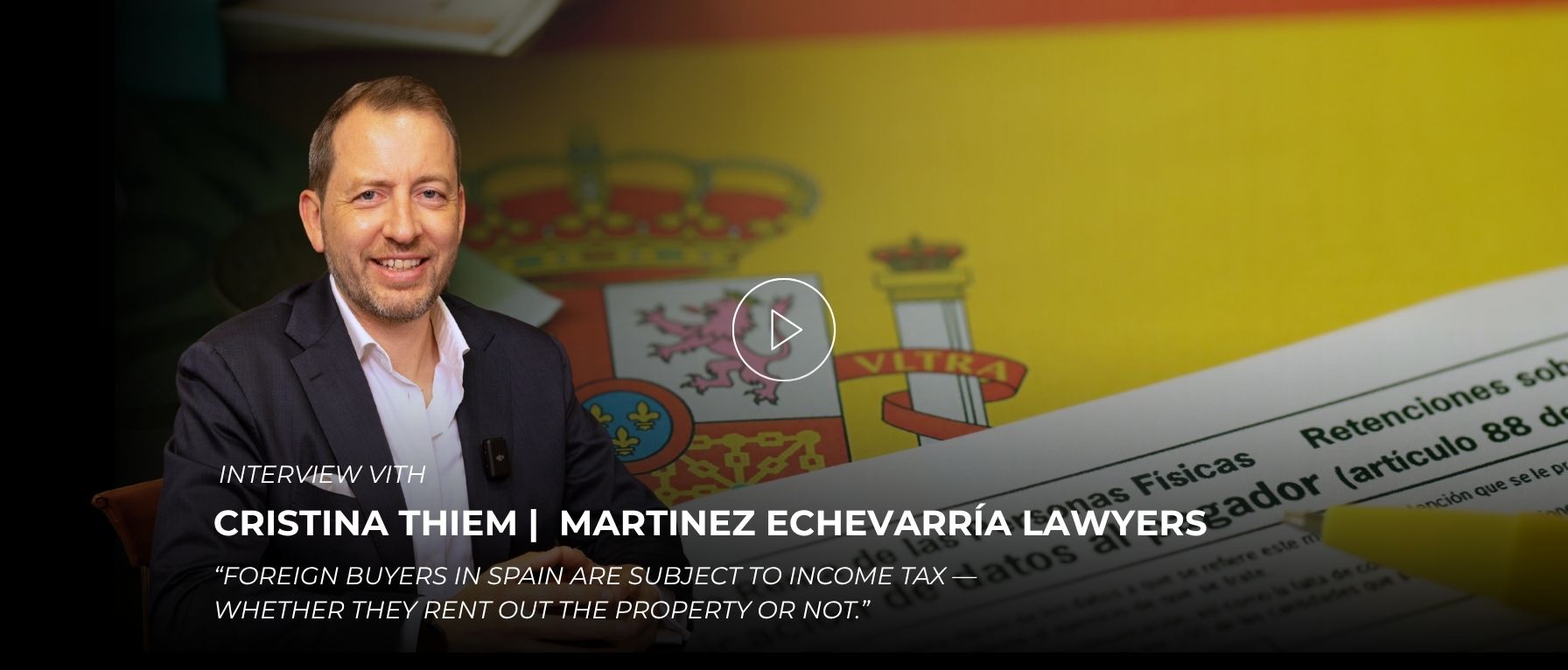
Do foreign buyers have to pay income tax in Spain?
Do foreign buyers have to pay income tax in Spain?
Buying a property in Spain is a dream for many international buyers. However, alongside the charm of the Mediterranean lifestyle and sea views, there are also tax responsibilities that should not be overlooked. One of the most relevant is the income tax for foreign buyers in Spain, a topic that raises many questions among those who do not reside permanently in the country.
In this article, we explain clearly and up-to-date what this tax consists of, how it is calculated, when it must be declared, and how it varies depending on the use of the property. We also share practical tips and emotional insights to help you make informed and mindful financial decisions.
What is the income tax for foreign buyers?
Legally speaking, when a foreign citizen purchases a property in Spain without residing in the country for more than 183 days per year, they are considered a non-tax resident. Therefore, the property acquired is considered a second residence, and this entails the obligation to pay the Non-Resident Income Tax (IRNR).
This tax applies regardless of whether the property is rented out or remains empty. And here lies the point many buyers are unaware of: even if you only use the home for vacations, you are still subject to this tax.
How is this Income Tax for Foreign Buyers calculated?
The method of calculating the tax depends on how the property is used:
If not rented out (personal or family use)
In this case, the Spanish Tax Agency assumes the property generates a deemed income (i.e., a fictitious income), which must be declared annually. This is calculated as a percentage of the property’s cadastral value:
-
If the cadastral value has been revised in the last 10 years, a rate of 1.1% is applied.
-
If not revised recently, a rate of 2% applies.
This amount is then multiplied by the corresponding tax rate:
-
19% for residents of the EU, Norway, and Iceland.
-
24% for residents outside the EU.
📌 You can check your property’s cadastral value on your local IBI bill or via the Cadastre portal: https://www.sedecatastro.gob.es
If rented to third parties
If you decide to rent out your Spanish property, whether seasonally or long-term, you must declare the actual rental income. The tax must be paid quarterly, and the deadlines for filing are as follows:
-
Q1: April 1 to April 20
-
Q2: July 1 to July 20
-
Q3: October 1 to October 20
-
Q4: January 1 to January 20 (following year)
Rental income is subject to the same tax rate as the previous case, but if you reside in the EU or EEA, you can deduct expenses related to the rental (such as maintenance, insurance, mortgage interest, or community fees). If not, taxation is applied on the gross income.
Who is required to file the tax return?
The obligation lies with the property owner, regardless of whether they reside in Spain. If the property has multiple owners (e.g., a married couple), each must file a separate return, in proportion to their share of ownership.
What happens if you don’t file?
The Spanish Tax Agency may carry out audits, especially if it detects undeclared income through platforms like Airbnb, Booking, or Vrbo. Failure to file returns may lead to:
-
Fines.
-
Surcharges for late filing.
-
Interest on late payments.
In serious or repeated cases, tax inspection procedures may even be initiated. To avoid these situations, it is highly recommended to work with a tax advisor who specializes in non-residents.
How does this affect foreign buyers emotionally?
Buying a home in Spain is often an emotional decision: the desire for a retreat by the sea, a place to retire, or a property to enjoy with family. However, once the initial excitement wears off, it’s essential to also view the investment from a fiscally responsible perspective.
The income tax for foreign buyers in Spain should not be seen as a burden, but rather as part of the responsibility that comes with owning property in another country. Managing these taxes properly provides peace of mind, prevents surprises, and allows you to enjoy your home without legal concerns.
Practical tips for non-residents
Here are some key recommendations to keep in mind:
-
Decide from the beginning how you will use the property: for personal use, rental, or both.
-
Keep all documents related to the property and its expenses if you plan to rent it out.
-
Work with a specialized tax advisor. Many firms offer tax management services for non-residents.
-
Check if your country has a double taxation agreement with Spain. More information at: https://www.agenciatributaria.es
-
Be aware of other additional taxes, such as property tax (IBI), waste collection fees, or wealth tax if your assets exceed certain thresholds.
Conclusion
The income tax for foreign property buyers in Spain is a real obligation that should not be taken lightly. Whether you decide to rent out the property or simply enjoy your home in the Costa del Sol during the summer, understanding your tax responsibilities is essential.
Having a good advisor, keeping your documentation in order, and correctly declaring your income (or deemed income) will not only help you avoid penalties but also allow you to fully enjoy your real estate investment.
At FM Properties, we support our clients before, during, and after the purchase. Our com
mitment doesn’t end at the signing of the contract: we want your experience in Spain to be as safe as it is enjoyable.
Frequently Asked Questions (FAQ)
1. Do I have to pay taxes even if I don’t rent out my property?
Yes, you must pay for deemed income, even if the property generates no actual income.
2. When is the annual IRNR return filed?
During the year following the fiscal year, using Form 210.
3. What if there are multiple property owners?
Each owner must file their own return, according to their ownership share.
4. Can I deduct expenses if I rent the property?
Only if you reside in an EU or EEA country.
5. What happens if I don’t declare?
You may face fines, surcharges, or even a tax inspection.
Would you like to know more about optimizing your property investment in Spain as a foreign buyer? Contact us and we’ll be happy to assist you.

